Tuesday, March 13, 2018

Stroke rehabilitation trials: let’s measure what matters

In this blog, Julie Duncan Millar, PhD Student and Physiotherapist, reflects on the difficulties of comparing and sharing upper limb rehabilitation trial data and proposes a condensed toolkit of measures recommended for researchers to use in future trials. The toolkit was developed by considering the stroke survivor, family and friend, clinician and researcher perspectives on life after stroke with upper limb dysfunction.

As an NHS specialist neurological outpatients physiotherapist, I worked regularly with stroke survivors and their family and friends. Up to three quarters of stroke survivors have some form of dysfunction affecting the arm, shoulder and/or hand. So it was no surprise that they would commonly ask for help with their upper limb: the grandparent who wanted to get back to looking after their grandchildren involving lots of cuddling, lifting, and playing; the parent who needed to get back to driving to allow them to drop the kids at school before heading to work; the keen golfer wanting to get back to swinging a club and playing with friends. I was always striving to do the best by my patients by providing a person centred approach to rehabilitation. I’d keep asking myself: Which intervention (treatment) is most appropriate for this person, at this time, at this stage in their recovery?  I considered the evidence: What is the most effective dose of the intervention? How much work may this person have to put in to the treatment and for what gain? How much will it improve my patient’s life?

Person-centred stroke rehabilitation. Which treatment for this person, at this time? How much work will they have to put in and how much will it improve their life?

Upper limb rehabilitation: what the evidence says

Keen to keep up to date, off I trotted to find the latest evidence on upper limb rehabilitation following stroke. There was a lot of data. So much data in fact that a group of editors from Cochrane Stroke Group, led by Dr. Alex Pollock, had completed a Cochrane overview (a systematic review of systematic reviews) into ‘Interventions for improving upper limb function after stroke’. “Hurrah”, I thought, “All of my questions, finally answered”. Well…sort of.

After pooling data from 40 reviews (19 Cochrane Reviews and 21 non-Cochrane) on 503 studies on over 18,000 participants, and lots of complex number crunching, they concluded that…drum roll please… there was no high quality data to support the use of any of the interventions in the overview. None. Zero. Zilch. That meant I couldn’t say with certainty which of the upper limb interventions in my clinical repertoire might work best for each of my patients.

However, all was not lost. There was evidence that some interventions would probably have a beneficial effect: constraint-induced movement therapy, mental practice, mirror therapy, interventions for sensory impairment, virtual reality and relatively high dose of repetitive task practice, as well as an indication that unilateral upper limb training may be more effective than bilateral upper limb training. Yet, it was difficult to identify a suitable dose for these interventions.

While these results were really useful there was nothing saying this is likely to work, for this type of patient with this type of problem with their upper limb.  That wasn’t the reviewer’s fault, the data just weren’t available.

The problem of too many outcomes and a proposed solution

One way to tackle this problem is to look at the comparability of the data produced in trials investigating the interventions. When undertaking the overview, Dr. Pollock and her team had to pool together data from 503 different studies to identify the most effective interventions. That’s a lot of data; a lot of outcomes to compare, that were captured by a lot of different outcome measures. In fact, at least 48 different upper limb outcome measures have been used in upper limb rehabilitation trials (Santisteban et al., 2016). That is only considering the ‘typical’ upper limb outcomes such as grip strength, pain in the upper limb, or ability to dress self using both arms. That doesn’t even start taking into consideration outcomes beyond these ‘typical’ ones. Yet we know that it’s not just these ‘typical’ outcomes that affect stroke survivors with upper limb dysfunction. For example recent qualitative work identified that life after stroke and sense of self are also affected (Purton 2017) so, from a stroke survivors perspective, these may also need consideration.

Unsurprisingly, researchers realise that using all of these different outcome measures makes it difficult to share and compare data to identify effective treatments. Therefore, recently the Stroke Rehabilitation and Recovery Roundtable (SRRR) agreed consensus recommendations on the measures researchers should use in all sensorimotor trials (Kwakkel et al., 2017). It’s great to see a drive towards consensus on outcome measure use in trials and I’m well and truly on board.  So too are clinicians as demonstrated by the standard set of outcome measures recommended for stroke clinicians by ICHOM. Owing to the complexity of the upper limb, I believe we need to build on the momentum of the SRRR and support informed selection of the measures used specifically in upper limb rehabilitation trials. Herein followed my PhD: Standardising Measures in Arm Rehabilitation Trials (SMART). 

Measuring what matters to stroke survivors

Initiatives such as COMET are here to support standardisation work, but at present there is no gold standard way to agree on which outcome measures to use in trials. However, a central point to all outcome measure recommendations is to consider the perspective of those living with the condition. Fantastic. That makes perfect sense. In order to find out if an intervention has a meaningful effect on important outcomes, you need to identify important outcomes by speaking to those who know most about the condition.

Arms outstretched reaching up to question marks

What matters most about the arm and how it affects life after stroke?

I took the angle that if you are a researcher about to conduct a trial, or pool data in a review, I believe you would want to capture outcomes that are deemed important by those who will ultimately use, and benefit from, your research findings: stroke survivors, family and friends, and clinicians. I think we all agree that capturing outcomes using valid and reliable measures is important, but I argue that if the outcome you are measuring has no relation to life after stroke, what’s the point?

A key phase of my PhD involved identifying important outcomes by asking stroke survivors, family and friends, and clinicians ‘What matters most about the arm and how it affects life after stroke?’. The results of this study informed the remainder of my PhD: I linked these outcomes to all of the different outcome measures used in trials within the Cochrane Overview (Pollock et al., 2014) to see which outcome measures captured which important outcomes. I then conducted an international two round online consensus survey, called an eDelphi, with researchers and clinicians to identify the most important and feasible measures. Finally, I held an international consensus meeting with all stakeholders to agree the measures that would be recommended for use in all future stroke upper limb rehabilitation trials.

When I talk to people outwith research about my PhD I am often met with a puzzled look: ‘Don’t researchers already know what to measure in trials?’ It seemed sort of obvious. Then I realised, researchers don’t always have the luxury I had as a clinician. I could simply ask my patient ‘What matters most to you?’ I could easily make my treatment ‘person centred’. Researchers couldn’t easily make their trials ‘person centred’ because it wasn’t completely clear what outcomes are important to stroke survivors, family and friends, and clinicians.

The SMART toolbox

So in order to bridge this gap and support informed selection of outcome measure use in future upper limb rehabilitation trials, I have developed the SMART toolbox. This was the end result of my PhD. As detailed above, it involved a great deal of engagement with stroke survivors, family and friends, clinicians and researchers to develop these international consensus recommendations. For researchers designing future trials or conducting reviews on upper limb rehabilitation, they simply need to look in the SMART toolbox and select their primary and secondary outcome measures across the International Classification of Functioning, Disability and Health framework, while considering their own individual trials aim. Of course, researchers are free to select other measures from outwith the SMART toolbox, but we would recommend starting at the SMART toolbox as the ‘go to’. Not only do we expect this to improve data comparability but also researchers will know when selecting the measures that they are capturing outcomes that matter to stroke survivors, family and friends, and clinicians. No more endless searching and debating the most important measures; the hard work has already been done. Therefore selecting measures from the SMART toolbox will also reduce study set up time.

We accept that, like most things in life, there are limitations and the SMART toolbox isn’t perfect; but I don’t think a perfect measure exists. However careful selection from these agreed measures is a pragmatic solution and I believe that the main strength of my project is the extensive stakeholder engagement in the consensus process. The effects of stroke are multifaceted, the arm is complicated, and life after stroke is unique for each person. There are lots of things to take into consideration when selecting outcome measures to use in trials or to pool in reviews.  However I believe that by involving stroke survivors, family and friends, and clinicians in this study, we are a step closer to making things simpler for researchers, who in turn make it easier to identify effective interventions for clinicians. This will ultimately improve life after stroke for stroke survivors. To learn more, and start using the SMART toolbox, keep your eyes peeled for our upcoming papers.

I would like to acknowledge the guidance and input from my ever supportive supervisory team – Dr. Myzoon Ali, Prof. Frederike van Wijck and Dr. Alex Pollock.

Join in the conversation on Twitter with @jduncanmillar @CochraneUK #LifeAfterStroke or leave a comment on the blog.

Keep up to date with the SMART toolbox: on Research gate, NMAHP RU  or Twitter

References may be found here

Julie Duncan Millar has nothing to disclose.

The post Stroke rehabilitation trials: let’s measure what matters appeared first on Students 4 Best Evidence.

Monday, March 12, 2018

How to Make Your First Major Purchase

Most major purchases, however, require that you finance—aka, borrow—to make the purchase. Here's what you need to know in advance.

The post How to Make Your First Major Purchase appeared first on Earnest Blog | Money Advice for Young Professionals.

Friday, March 9, 2018

How to Find a Family Day Care Center

Identifying the best daycare center for your children is one of the biggest decisions that you will have to make as a parent. It is not just about finding a daycare center that is close to home, or open at the right hours. It is about finding the fit that is right for your child.

Family Day Care Centers

The early years are so important to a child’s development. These are the years they spend building social skills, understanding how student-teacher dynamics work, and being able to regulate their emotions. The impact of high versus low-quality daycare can be huge for a child, especially if both their parents are working most weekdays.

A family day care center is a location where parents will drop off their kids in the morning, and pick them up when they are done with work. The hours for a day care center are very similar to pre-school and early schooling. The schedule will be less focused on education, and more focused on children bonding with each other and enjoying themselves.

Finding the Best Day Care Center

1. Identify Priorities

What do you want out of a daycare? Are you satisfied with a decent location that is right next to where you work? Or are you more concerned with the quality of the day care employees, the ratio of adults to children, and reviews from other parents? Identify the priorities that mean the most to you in your search for an ideal day care location, and then begin your search.

2. Research

It is easy to use the internet to get a list of all the reputable daycare locations in your area. You can widen the search to include the entire city if you are after quality. Or you can stick to a few zip codes, or look at a map, to ensure you find ones that are closest to where you live or work.

Another aspect of research is getting real reviews from people you can trust. Talk with your friends who are parents, speak with colleagues at work, get information from family members who are raising children in the area, and collect all that data. Now you should have some idea about the top three or four-day care centers in the area, based on the number of great recommendations you got for each place.

3. In-Person Visits

You can hear all the accolades you want about a day care center, but it has to feel right to you. Make sure that you are spending time at each of the places in your top three or top five list of day care centers. Do not try and visit them all in the same day, as you will end up rushing through each visit.

Spend time with those who are in charge, see the adults and children in action, and get a feel for the place. Think about how your child would fit into such an environment. And then go with your gut instinct, as it will never guide you wrong when it comes to your child!

The post How to Find a Family Day Care Center appeared first on .

Tuesday, March 6, 2018

How to Build A Career from Scratch

This is part of our series A Guide to Jumpstarting Your Life Goals. The basic steps for building your career: Completing a 2-year or 4-year degree and having a successful transcript to show for it. Gaining job experience (in order of positive impact on your resume) Paid/non-career related Career-related/unpaid or project work Career-related and paid. […]

The post How to Build A Career from Scratch appeared first on Earnest Blog | Money Advice for Young Professionals.

Friday, March 2, 2018

What is the Academic Foundation Programme?

What is the Foundation Programme (FP)?

The foundation programme is a UK based, 2-year programme for graduating medical students. Through foundation years 1 and 2 (FY1 and FY2), doctors are able to develop skills they learnt at medical school and begin to become a competent practitioner, investigating and treating medical conditions.

The jobs at this level are allocated based on an individual’s score out of 100. Applicants rank the various UK deaneries in order and based on their score, they are assigned to a region of the UK. Their score consists of their Educational Performance Measure (EPM) out of 50, and a Situational Judgement Test (SJT) score of 50. More in-depth information regarding the standard foundation programme is beyond the scope of this article, but it can be found on the GMC’s website at https://www.gmc-uk.org/education/postgraduate/foundation_programme.asp

What is the Academic Foundation Programme (AFP)?

The Academic Foundation Programme (AFP) can be seen as an extension of the normal FP. It was developed as part of the Modernising Medical Careers (MMC) scheme. It allows doctors to explore a range of academic interests, gain additional qualifications, build their portfolio and experience life as a clinical academic. This is important since only 5% of the medical force consists of academics, making this career path highly competitive. The academic component is allocated in place of one of your dedicated rotations (i.e. a 4-month block during F2), or an academic release day throughout F1 and F2.

Types of AFP available

There are 3 broad categories of AFP available, these are:

  • Research
  • Medical Education
  • Leadership and Management

The most common type, research AFP’s, tend to have a heavier focus on scientific work, developing core research methodology skills as well as critically appraising medical literature. They are a great way of conducting independent research, which can often lead to presenting or publishing the work thereafter.

Medical education AFP’s tend to focus more on teaching and mentorship. This may involve developing teaching skills, setting up teaching programmes or building mentorship schemes for medical students.

AFP posts in leadership and management involve a wide variety of projects in leadership as well as the ability to complete additional qualifications in management.

How an AFP fits into the ‘academic career pathway’

Following the Walport Report (2005), the government identified a lack in structure for academia careers as well as reduced posts available. As a result, the modern academic pathway was created (Figure 1). However, the pathway is flexible, facilitating a “hop-on, hop-off” progression.

The AFP encompasses the first two years of working as a doctor following medical school, yet it is not a prerequisite for an academic career. It merely serves as an opportunity to learn what it is like to work as an academic, whilst gaining important research skills and building your portfolio. After the foundation years, doctors can then apply for an Academic Clinical Fellowship (ACF), which involves a quarter of the 3 year programme dedicated to academia. This is almost double the exposure compared to AFP. From here, the Clinical Lectureship (CL) 4 year post consists of a 50/50 split in clinical and academic work allowing a deeper focus on the research elements of the job. Finally, once completed, a senior lectureship or professorship can be applied for, usually requiring a PhD to be obtained beforehand. The further details about ACF, CL and senior academic posts is beyond the scope of this article.

Figure 1. Overview of the UK academic career pathway (1)

Application process

The application process is similar to that of the standard FP. However, the AFP application allows you to select a maximum of two deaneries to apply to, within which you must rank the available jobs. In addition to the standard details needed for the FP application, you must also provide 250-word answers to a number of ‘white-space questions’. The content and quantity of these questions varies between the deaneries. Furthermore, you can add details of any additional degrees, publications, presentations and prizes to further enhance the strength of your application.

Successful candidates are shortlisted for an interview, which usually consists of a clinical and academic component. The criteria for interview can usually be found on the deanery’s website in the form of a person specification. Once completed, the first round of offers is sent out in January and candidates have 48 hours to accept or decline. The remaining places are then offered in various rounds until all the positions are filled.

It should be noted that the SJT is not used for any part of the assessment for AFP places. Nevertheless, candidates are expected to achieve a reasonable score in the SJT. If not, they may be called in to discuss components of the SJT and to ensure the candidates possess the necessary ethical and decision-making principles for life as a junior doctor.

Advantages

  • No drawbacks in applying – If you are unsuccessful for AFP, this has no negative consequences for the normal FP application. You simply continue as normal.
  • Protected academic time
  • Opportunity to explore interests in academia/research, teaching or leadership
  • Enhance your portfolio through relevant experience, presentations and publications – this is useful for further speciality training applications, where these portfolio elements count for points.
  • Develop transferrable skills including organisation, independence and appraisal – these skills are invaluable whether you choose to stay with academia or choose to remain clinical.

Disadvantages

  • Very competitive – competition ratios range from 1:1 to 1:9.
  • Hard work – academia is difficult, it requires dedication to conduct research and see through projects to completion and dissemination.
  • Reduced clinical time – you are required to achieve the same clinical competencies as your standard FP colleagues but within a decreased amount of clinical time.
  • Reduced pay during the academic blocks

Summary

The AFP is an opportunity to gain a deeper insight into the academic world and develop key skills in research, teaching or leadership. It is a competitive, yet worthwhile experience achieving both clinical and academic competencies. Nevertheless, the decision to apply should be based on personal choice, with a clear vision as to what you wish to obtain from the programme.

References

  1. Academic Careers Sub-Committee of Modernising Medical Careers and the UK Clinical Collaboration. Medically- and dentally-qualified academic staff: Recommendations for training the researchers and educators of the future. 2005.

The post What is the Academic Foundation Programme? appeared first on Students 4 Best Evidence.

Pharmacological and non-pharmacological interventions for orthodontic pain management

Orthodontic pain

Orthodontics is the area of ​​Dentistry dedicated to the growth, development and relationship between dentition, jaws and face. It also involves corrective treatment of teeth and jaws when they are irregular in alignment, morphology or function. Usually, orthodontic treatment is performed to improve the function and appearance of teeth. This can involve tooth movement by applying forces through fixed, removable or functional appliances [1].

Pain is a recurrent undesirable side effect in orthodontic treatment. It is a complex phenomenon influenced by factors such as age, sex, individual pain threshold and amount of applied force. To achieve orthodontic movement, forces are applied in the dentoalveolar complex, resulting in inflammation or ischemia in the periodontal ligament with subsequent release of histamine, bradykinin, prostaglandins, substance P and serotonin. These mediators stimulate local nerve endings and send pain signals to the brain [2].

Pain experience is reported by 91% to 94% of patients undergoing orthodontic treatment.[3] Perceived as discomfort, dull pain and hypersensitivity in affected teeth, it tends to reach the peak after 24 hours, with decline after the third day of use of the appliance. Pain is a major concern for professionals and patients, and may discourage them seeking, or maintaining orthodontic treatment [4].

Pain experience is reported by 91% to 94% of patients undergoing orthodontic treatment

Management of orthodontic pain

Several strategies have been applied to relieve pain resulting from orthodontic treatment.[2] For patients experiencing greater pain, the orthodontist may recommend pharmacological or non-pharmacological methods, considering the limit of sensitivity to pain or emotional condition reported [5].

Non-steroidal anti-inflammatory drugs (NSAIDs) are the most frequently used method for pain relief. NSAIDs block the formation of arachidonic acid in the prostaglandin production cycle, which would lead to pain. Other methods include low intensity laser therapy, acupuncture, transcutaneous electrical nerve stimulation, periodontal ligament vibratory stimulation, viscoelastic bite wafers and even chewing gums. These methods can relieve compression of the periodontal ligament and restore normal vascular and lymphatic circulation in order to eliminate oedema and inflammation and reduce pain [2].

Pharmacological methods for orthodontic pain management

Non-steroidal anti-inflammatory drugs are the most popular method of pain control used during orthodontic treatment [1].  There is currently no universal recommendation on the use of analgesics,[6] however, NSAIDs are readily available, low cost, easily administered and generally harmless (in terms of lack of side effects) [1].

Ibuprofen and acetylsalicylic acid can effectively relieve orthodontic pain [1]. The analgesic action is explained by the ability to inhibit the synthesis of prostaglandins at the site of tissue injury by inhibiting the COX-1 and COX-2 cyclooxygenase enzymes [6]. They are usually administered within two hours after the orthodontic visit and during the recommended time interval in order to establish pain control. However, the use of NSAIDs is still controversial because of the potential influence on tooth movement. Prostaglandins are important mediators of bone resorption, and it has been suggested that reduced activity through NSAIDs may affect orthodontic movement even at an insignificant clinical level [1].

Paracetamol (acetaminophen) has a mechanism of action similar to that of NSAIDs, it inhibits COX with a predominant effect on COX-2. However, unlike NSAIDs, it acts on a level of the central nervous system that serves the cell membrane. As a result, inhibition of prostaglandins is minimal and use has no effect on tooth movement.[1]

Although they are reported as the most popular method for orthodontic pain control, analgesic drugs are used by only 16% to 27% of patients during the first and second days after orthodontic arch insertion [3].

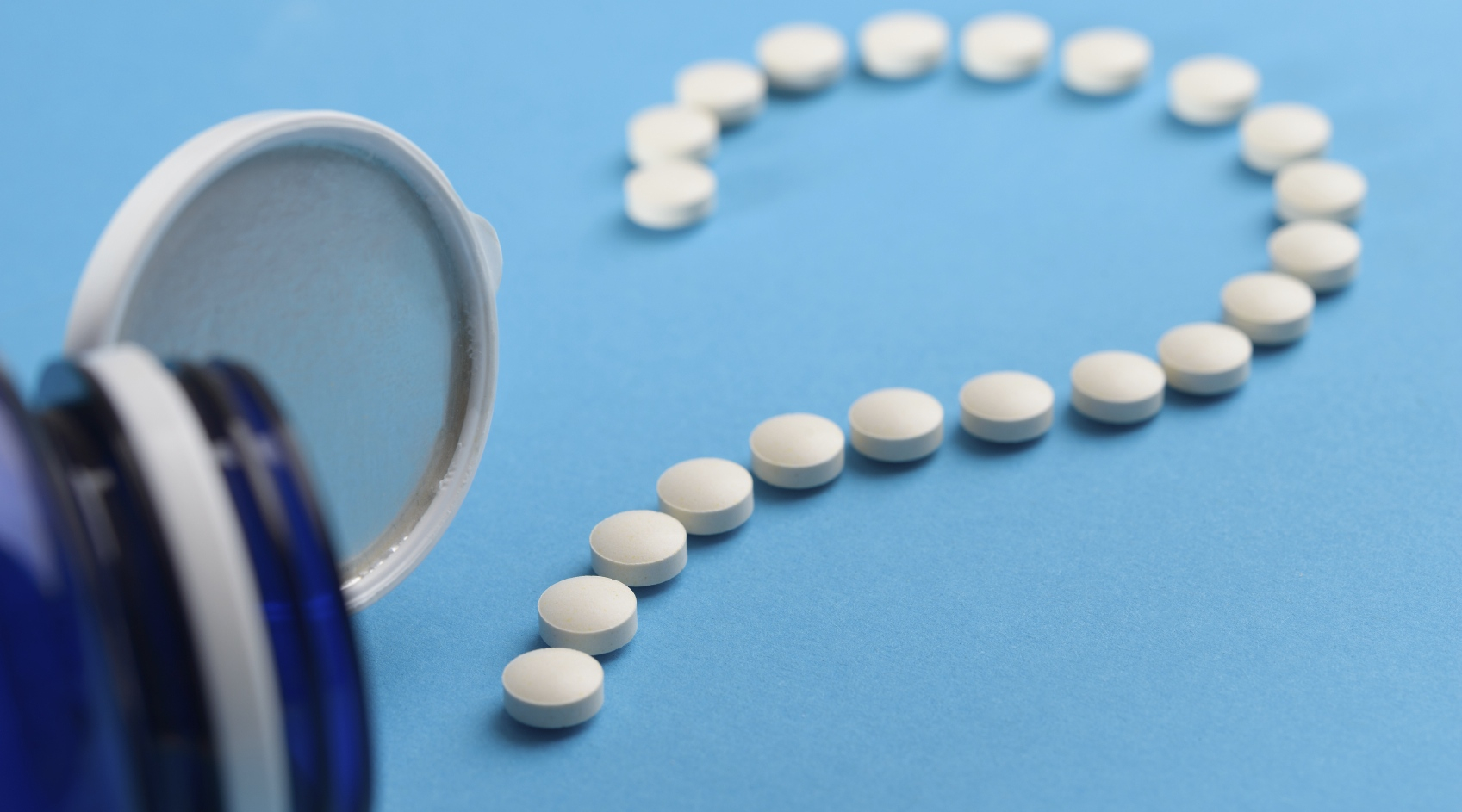
Question mark made with white tablets

There is currently no universal recommendation on the use of analgesics for orthodontic pain

Non-pharmacological methods for orthodontic pain management

Several drugs are effective in controlling pain during orthodontic treatment. However, drugs can have negative effects on tooth movement and some patients may be allergic or unwilling to use them. In order to find alternatives for pain relief, other approaches have been investigated, such as low intensity laser therapy (LLLT) [7].

The action of LLLT in reducing pain during orthodontic movement and the placement of elastic separators has been evaluated [5]. The low-intensity aluminium-gallium-indium-phosphate laser (635 nm, 6mW, 10mJ) showed efficacy when applied every 12 hours for 7 days for 30 seconds after placement of elastic separators.[8] Application of the laser diode gallium-aluminium-arsenic (810 nm, 100 mW, 2 J/cm2) for 15 seconds at each point (mesial and distal interdental papilla and near the root apex) immediately after the placement of elastic separators was effective [5]. The gallium-aluminium-arsenic diode laser (940 nm, 100 mW, 7.5 J/cm2) applied immediately after the insertion of nickel-titanium closed-coil springs for bilateral canine retraction, and with weekly intervals in the subsequent two weeks, was also able to reduce pain, and accelerate orthodontic movement.[9] Standardization of the type and use of LLLT still needs to be better established. The clinical results and the effectiveness of LLLT in reducing orthodontic pain are directly related to laser type, wavelength, energy density (J/cm2), application time per point and frequency [5].

The pulsed electromagnetic field is a non-invasive technique that has been useful as adjuvant therapy in the treatment of post-operative pain and oedema, generating small explosions of current electrical energy in injured tissues without producing heat or affecting the main biological functions. It demonstrated a significant ability to relieve orthodontic pain at 24, 48 and 72 hours after the initial orthodontic arch insertion in female subjects, applied immediately after the insertion, generating an electromagnetic field of 27.12 MHz, with power peak of 80 dbm, pulse rate of 2400 pulses per second and duration of 420 milliseconds. In this way, it can be an effective alternative to reduce the pain caused by the initial orthodontic movement [3].

There is evidence that vibratory stimulation reduces pain from teeth or surrounding tissues. Vibration can help relieve compression of the periodontal ligament, promoting normal circulation and preventing the proliferation of inflammatory by-products. Another possibility is the “gate control” theory, which suggests that pain can be reduced by the simultaneous activation of nerve fibres that lead to non-noxious stimuli. Mild micropulses (0.25 N at 30 Hz) applied daily for 20 minutes could significantly reduce the perception of pain in patients undergoing orthodontic treatment, although further studies on the technique are still needed [2].

Conclusions

  • Analgesics are still the main modality of treatment to reduce orthodontic pain. However, pharmacological actions, as well as side effects, should be identified before adopting the drugs in clinical practice.
  • Further studies are needed to determine effective protocols for the use of non-pharmacological methods for orthodontic pain control in clinical settings.

References can be found here

The post Pharmacological and non-pharmacological interventions for orthodontic pain management appeared first on Students 4 Best Evidence.